
In today’s global workplace, the concept of time zones is no longer just a geographic reference or a scheduling detail. For organizations operating across borders—particularly FDI companies, multinational corporations (MNCs), and remote-first organizations—time zones have become an operational variable that directly affects coordination, decision-making speed, and long-term team performance.
When a leader works with teams across Asia, Europe, and North America, time no longer operates as a simple linear structure. Instead, it becomes a system that must be intentionally designed. Effective leaders do not simply adapt their schedules to different time zones; they establish an operating cadence that allows distributed teams to collaborate effectively despite not sharing the same working hours.
As cross-border collaboration continues to expand, the ability to understand and manage time zones in global work is increasingly becoming a defining characteristic of effective leadership.
1. Time Zones in Global Business Operations
Understanding time zones is not only about avoiding mistakes in meeting schedules or project deadlines. More importantly, it allows leaders to design an effective operating model when teams are distributed across multiple geographic regions.
1.1 Time Zones and UTC: The Foundation of Global Time
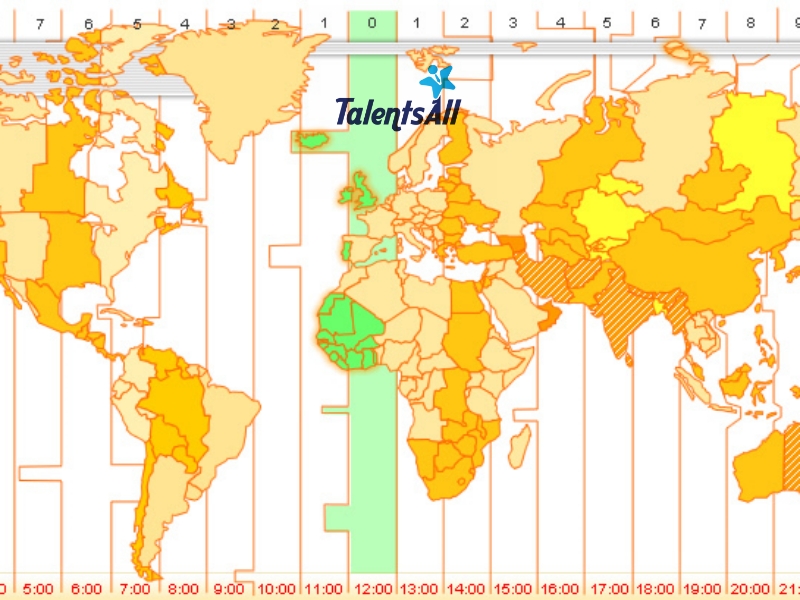
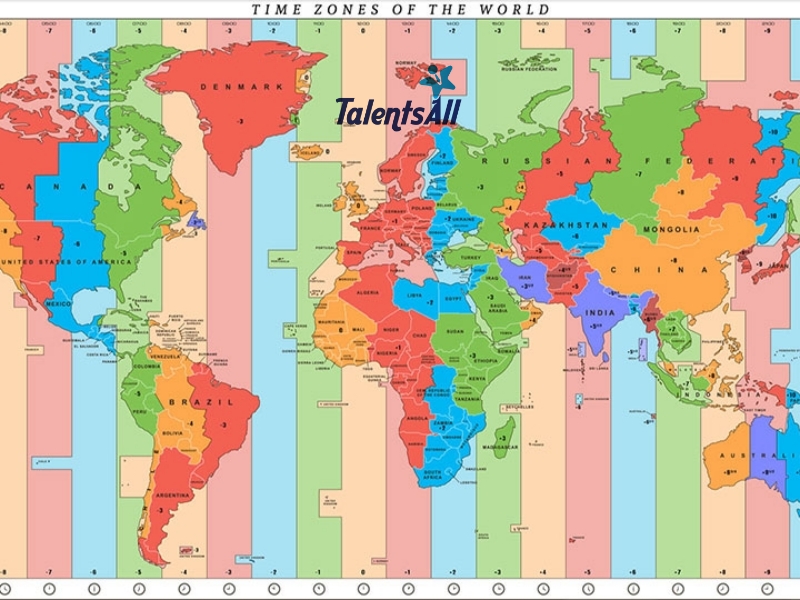
Globally, Coordinated Universal Time (UTC) serves as the standard reference point for all time zones. Each country or region determines its local time by applying a positive or negative offset from UTC.
For example:
- Vietnam operates at UTC+7
- Singapore operates at UTC+8
- London operates at UTC+0 or UTC+1 depending on daylight saving time
In international business environments, UTC often serves as a neutral reference that prevents confusion when teams across multiple locations coordinate meetings, deadlines, or product releases.
When multiple regions collaborate on a project, using UTC as a shared reference can significantly reduce scheduling errors and operational friction.
1.2 Why Leaders Must Understand Time Zones as an Operational Design Factor
In many organizations, time zones are treated as a minor scheduling detail. However, in globally distributed companies, they are a fundamental element of organizational design.
Consider a company with:
- a product team in the United States
- an engineering team in Vietnam
- a marketing team in Europe
Without clear operating rules, meeting schedules quickly become fragmented. Some teams repeatedly work late evenings while others operate entirely within regular business hours.
Experienced leaders recognize that time zones are not just logistical information—they are a structural component of how the organization operates. When designed thoughtfully, time zones can even become an advantage, enabling a “follow-the-sun” model where teams in different regions continue work across the 24-hour cycle.
2. Common Challenges When Working Across Time Zones
While global teams create opportunities for continuous operations and access to diverse talent, they also introduce operational challenges if time zones are not managed carefully.
2.1 Meeting Overload and Off-Hour Collaboration
In many international organizations, meetings are scheduled according to the headquarters’ time zone. As a result, teams in other regions are frequently required to attend meetings very early in the morning or late in the evening.
For example:
A meeting scheduled at 9:00 AM in the United States
corresponds to 9:00 PM in Vietnam
If such schedules occur several times each week, employees may experience an “always-on” working pattern where the boundaries between professional and personal time gradually disappear.
2.2 Extended Workdays
Another common effect of cross-time-zone collaboration is time shifting. Employees often perform regular work during local daytime hours while attending meetings with international teams late in the evening.
Over time, this can extend the working day well beyond typical office hours. For senior leaders in particular, this pattern can significantly reduce the ability to engage in strategic thinking—an activity that requires uninterrupted blocks of focused time.
2.3 Time Zone Inequality
A less visible but equally important issue is time zone inequality, where one region consistently sacrifices personal time to accommodate another region’s schedule.
If this imbalance continues over long periods, organizations may experience:
- declining team engagement
- reduced motivation
- increased employee turnover
Effective leaders actively design schedules that distribute the burden of off-hour collaboration more fairly across regions.
3. A Framework for Managing Time Zones in Distributed Teams
Organizations that operate successfully across time zones often shift from a sync-first model to an async-first model, where asynchronous communication becomes the default and real-time meetings are reserved for critical discussions.
3.1 Designing Overlap Windows
An overlap window is the period during which teams in different time zones are simultaneously online.
For example:
Vietnam – Europe overlap window
- 14:00 – 17:00 Vietnam
- 08:00 – 11:00 Europe
These overlapping hours are typically reserved for activities that require direct interaction, such as:
- strategic decision-making
- complex discussions
- cross-team problem solving
All other work can be handled asynchronously to reduce unnecessary meetings.
3.2 Prioritizing Asynchronous Communication
Asynchronous communication allows teams to collaborate without being online at the same time.
Common tools used in global teams include:
- Slack
- Notion
- project management platforms
A simple rule often applied in remote organizations is: if the issue does not require immediate feedback, write instead of scheduling a meeting. This approach significantly reduces meeting overload and allows team members to work according to their local time zones.
3.3 Maintaining a Decision Log
In distributed environments, documenting decisions clearly is essential for maintaining operational continuity.
A typical decision log records:
- the context of the decision
- the responsible individual
- implementation deadlines
- the next action steps
With a structured decision log, teams in different time zones can stay informed and continue work without needing to attend every meeting.
4. Questions Senior Candidates Should Ask Before Accepting an International Remote Role
When evaluating an international remote opportunity, senior candidates often focus on responsibilities, leadership scope, and organizational impact. However, understanding how the organization manages time zones in daily operations is equally important.
4.1 What Are the Core Hours?
Core hours refer to the time period when all team members are expected to be online for collaboration.
Examples may include:
- 14:00 – 18:00 Vietnam time
- or 20:00 – 23:00 Vietnam time
Understanding core hours helps candidates assess whether the organization’s operating rhythm aligns with their preferred work-life structure.
4.2 How Often Do International Meetings Occur?
Organizations differ significantly in how they structure communication. Some rely heavily on asynchronous updates and limit meetings to essential discussions, while others maintain a more meeting-driven culture.
Senior candidates should clarify:
- how many cross-regional meetings occur each week
- whether off-hour meetings are common
- whether meeting schedules rotate between regions
4.3 What Tools Support Global Collaboration?
Organizations that operate effectively across time zones typically implement structured systems for coordination, including:
- calendars displaying multiple time zones
- standardized time notation
- platforms for asynchronous updates and documentation
These systems help reduce unnecessary meetings while maintaining operational alignment across regions.
5. Practical Habits for Working Effectively Across Time Zones
Experienced leaders often adopt simple but powerful habits to manage global collaboration effectively.
5.1 Always Include Local Time and UTC
For example:
14:00 Vietnam (UTC+7)
This practice prevents confusion when daylight saving time shifts occur or when teams across multiple regions coordinate project milestones.
5.2 Configure Multiple Time Zones in Calendars
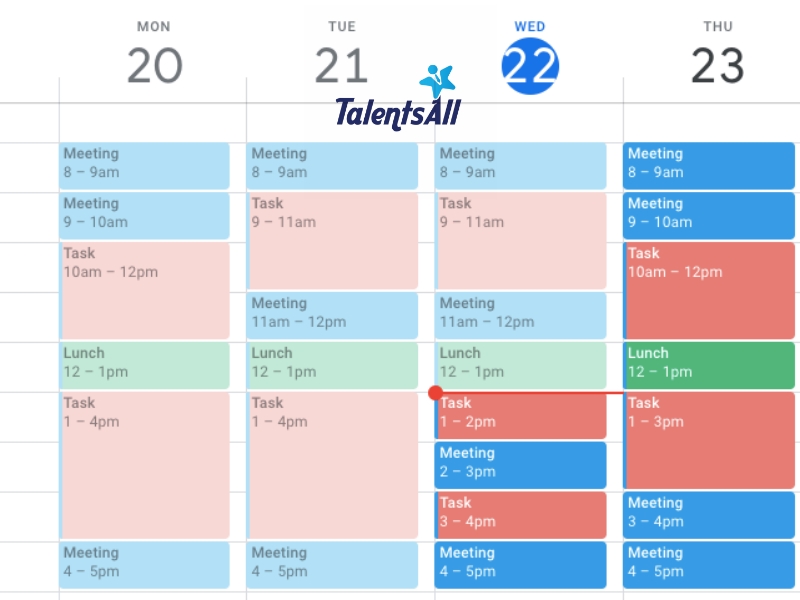
Tools such as Google Calendar and Outlook allow users to display multiple time zones simultaneously. This makes it significantly easier to identify overlap windows and schedule meetings efficiently.
5.3 Protect Deep Work Periods
For senior leaders, uninterrupted time for strategic thinking is often more valuable than additional meetings. Establishing no-meeting zones in the calendar helps preserve time for deep work and long-term planning.
6. Conclusion: Managing Time Zones as a Leadership Capability
In a global work environment, time zones are no longer just a scheduling detail. They are a structural component of how organizations operate and how teams collaborate.
Effective leaders understand that working across time zones cannot rely solely on personal flexibility. Instead, it requires a thoughtfully designed operating system where asynchronous communication, overlap windows, and structured decision-making processes support collaboration across regions.
For professionals working in FDI companies, multinational corporations, or international remote roles, the ability to manage time zones effectively is increasingly becoming a signal of leadership maturity and global operational capability.

TalentsAll – Executive Search for Global Roles
As organizations expand across borders, the demand for leaders who can operate effectively in global environments continues to grow. These roles require not only strong professional expertise but also the ability to coordinate teams, make decisions, and maintain alignment across multiple time zones.
If you are considering a move into FDI or multinational environments, or exploring international remote opportunities, selecting the right organization and role can significantly influence the next stage of your career. With experience connecting senior leaders to global opportunities, TalentsAll helps candidates identify roles that align with their expertise while providing insight into how international organizations truly operate.
Contact Information
- Email: trang@talentsall.com.vn
- Website: https://talentsall.com.vn/
TalentsAll – Talents for All, All for Talents