

SUM: For FDI companies to thrive in 2026, workforce flexibility is no longer an HR trend—it is a strategic survival mandate.
1. Introduction: Vietnam’s FDI Growth Creates a New Workforce Challenge
Vietnam continues to strengthen its position as one of Asia’s most attractive destinations for foreign direct investment. In 2025, FDI inflows into Vietnam exceeded US$38.4 billion, while disbursed FDI reached an estimated US$27.6 billion, the highest level recorded in five years. Manufacturing and processing remained the leading sector, showing that Vietnam is still a strategic hub for global production, supply chain relocation, and regional expansion.
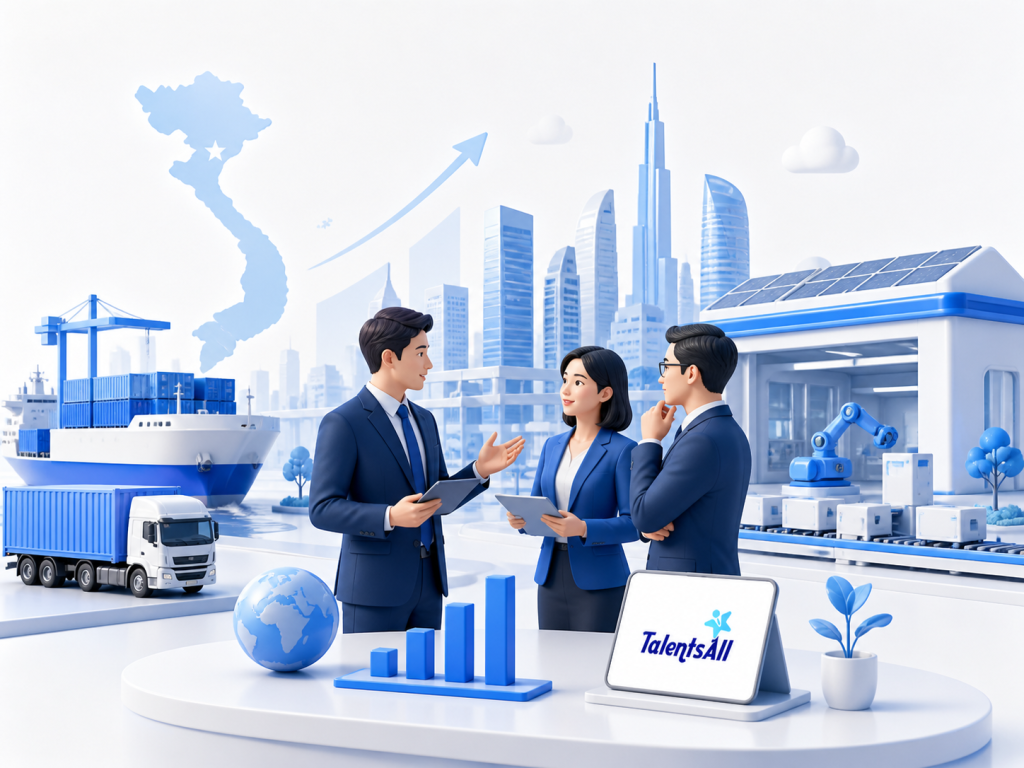
However, strong investment does not automatically translate into smooth business growth. For many FDI companies, the real challenge is no longer only about capital, infrastructure, or market entry. It is about people.
As Vietnam’s labor market becomes more competitive, companies are facing longer hiring cycles, higher expectations from employees, and increasing pressure to retain key talent. Salary growth has become more cautious, yet businesses still need to compete for high-impact roles in management, engineering, technology, operations, and commercial functions.
This creates a clear question for FDI leaders in 2026: how can a company scale faster without building an overly heavy, fixed, and costly workforce structure?
The answer lies in workforce flexibility.
2. What Workforce Flexibility Means for FDI Companies
Workforce flexibility is not simply about hiring temporary workers or reducing headcount. In a strategic sense, it means designing a workforce model that can expand, adjust, and refocus according to business needs.
For FDI companies in Vietnam, this is especially important because growth often happens in phases. A company may need a strong project team during factory setup, a specialized technical team during system implementation, or an experienced local leader during market entry. Once the project stabilizes, the same workforce structure may no longer be suitable.

A flexible workforce allows companies to match talent investment with business reality. Instead of treating every role as a permanent fixed cost, companies can separate which positions must remain core and which capabilities can be added through project-based hiring, interim management, outsourcing, or specialist partners.
This approach helps FDI companies scale with more control. It protects long-term stability while giving the business enough agility to respond to market changes.
3. Why Traditional Headcount Models Are Becoming Less Effective
3.1. Permanent-Only Structures Create Hidden Costs
Many FDI companies still rely heavily on a permanent-only headcount model. This structure may work well in a stable market where demand is predictable and business cycles are long. However, Vietnam’s current market is becoming more dynamic.
Expansion plans can change quickly. Supply chain decisions may shift based on global demand. Regulatory updates, industrial zone development, and local labor competition can also affect business timelines.
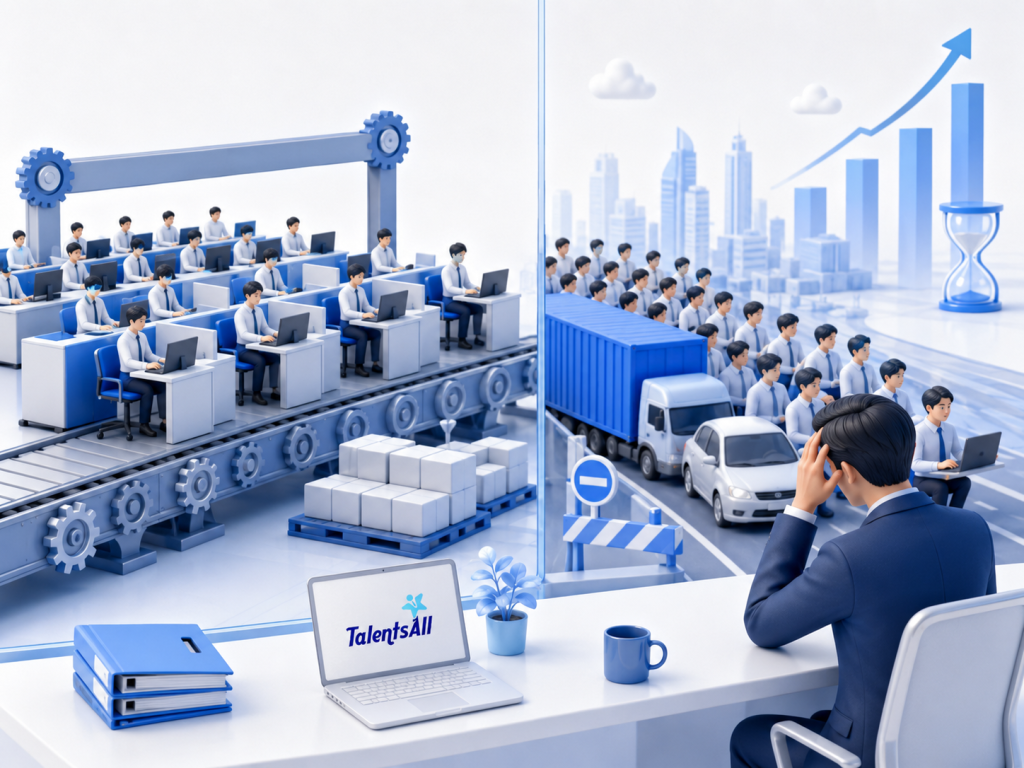
When the workforce is too fixed, companies may carry high labor costs even when project needs change. At the same time, when urgent business opportunities appear, they may not have the right people ready to move fast.
The cost is not only financial. A rigid structure can slow decision-making, delay projects, and reduce the company’s ability to respond to new opportunities.
3.2. Slow Hiring Can Delay Business Growth
Senior and specialized hiring in Vietnam often requires more time than companies expect. For critical roles, the challenge is not only finding candidates who meet technical requirements. The harder task is finding people who understand both global business standards and local operating realities.
This matters because FDI companies usually work under tight timelines. A factory setup, market launch, system transformation, or new business unit cannot always wait several months for the perfect candidate.
When hiring is reactive, the company starts searching only after a vacancy appears. By that point, the business may already be losing momentum.
Workforce flexibility solves this by encouraging companies to build talent pipelines earlier, use interim expertise when needed, and prepare alternative hiring options before the business reaches a critical point.
3.3. Talent Retention Requires More Than Salary Increases
Salary is important, but it is no longer the only factor that keeps strong employees engaged. Vietnam’s workforce is becoming more aware of career development, skill growth, workplace culture, and leadership quality.
According to PwC’s Vietnam workforce highlights, 75% of employees consider opportunities to develop new skills a fundamental part of a good job. The same report also shows that 60% expect AI to significantly change their jobs in the next three years.
This means retention strategy must become more sophisticated. FDI companies cannot rely only on annual salary reviews. They need clearer career paths, stronger managers, practical upskilling, and more adaptable role design.
A flexible workforce structure supports this because it allows companies to move people into higher-value work instead of keeping them trapped in outdated job scopes.
4. The Core-Agile Workforce Model for FDI Companies
4.1. Building a Strong Strategic Core
The first layer of workforce flexibility is the strategic core. These are the permanent employees who carry the company’s culture, business knowledge, compliance standards, and long-term operating capability.
For an FDI company, the core team often includes country leadership, finance, HR, operations, compliance, key technical managers, and essential commercial leaders. These roles should not be treated casually because they protect business continuity.
However, the core team should remain lean and high-quality. The goal is not to build the biggest permanent organization possible. The goal is to build a strong leadership and execution base that can guide the company through growth.
A lean core gives the company stability without creating unnecessary organizational weight.

4.2. Creating an Agile Talent Layer
The second layer is the agile workforce. This includes project-based experts, interim managers, outsourced teams, consultants, contract professionals, and specialized service providers.
For example, an FDI manufacturer entering Vietnam may not need a full permanent transformation team after the setup phase. However, during the first 6 to 12 months, the company may need experienced professionals in recruitment, legal coordination, factory setup, supply chain, HR operations, and local vendor management.
Instead of hiring all these roles permanently, the company can use an agile talent layer to support the business during high-demand periods.
This makes labor cost more adaptable. The company can increase workforce capacity when growth requires it and reduce complexity when the project becomes stable.
4.3. Using AI to Support Workforce Flexibility
AI is also changing the meaning of workforce flexibility. In Vietnam, PwC reported that 83% of employees use AI in their jobs, while 38% use generative AI daily. This shows that AI adoption is no longer a future trend. It is already shaping how people work.
For FDI companies, AI can reduce repetitive administrative tasks, improve reporting speed, support recruitment screening, assist with training materials, and help teams analyze workforce data more effectively.
However, AI should not be viewed only as a cost-cutting tool. Its greater value is that it allows human talent to focus on more strategic work. When routine tasks are automated, employees can spend more time on problem-solving, stakeholder management, process improvement, and business execution.
This is where technology and workforce flexibility work together. AI makes work more adaptable, while flexible workforce design ensures that people are placed where they create the most value.
5. How Workforce Flexibility Helps FDI Companies Scale Faster
5.1. Faster Market Entry
When entering or expanding in Vietnam, speed matters. Companies that wait too long to secure leadership, operations, HR, or technical talent may lose valuable time during setup.
A flexible hiring model allows companies to activate talent faster. Instead of depending only on permanent recruitment, businesses can use interim leaders, project consultants, or pre-built candidate pipelines to support immediate execution.
This is especially useful during early-stage market entry, factory establishment, office setup, or new business unit launch.
5.2. Better Cost Control
Workforce flexibility helps companies avoid turning every business need into a permanent fixed cost. This is important because not every capability is needed at the same intensity throughout the year.
For example, recruitment demand may be very high during expansion but lower after the team is stable. The need for process consultants may be urgent during transformation but unnecessary after implementation. Technical specialists may be required for a project but not for daily operations.
By separating permanent roles from flexible roles, FDI companies can manage costs more carefully without weakening business performance.

5.3. Stronger Retention of Key Talent
A flexible workforce model also improves retention because it allows companies to focus more resources on the people who matter most.
Instead of spreading budgets thinly across an oversized structure, companies can invest in high-impact core employees. This may include better leadership development, more competitive rewards for critical roles, clearer promotion paths, and stronger learning opportunities.
When key people feel that their roles are meaningful and their growth is supported, they are more likely to stay.
5.4. Higher Resilience During Market Changes
Market conditions can change quickly. Demand may rise, supply chains may shift, or new regulations may affect operations. Companies with rigid workforce structures often react slowly because every change requires internal approval, new hiring, or restructuring.
Flexible organizations can respond faster. They already have access to external expertise, talent pipelines, and alternative workforce options.
This makes workforce flexibility a resilience strategy, not just an HR tactic.
6. The Role of Executive Search in Workforce Flexibility
6.1. Moving from Reactive Hiring to Strategic Talent Pipeline
Traditional recruitment often begins when a role becomes vacant. This creates pressure, especially for senior positions. The company needs someone quickly, but the best candidates may not be actively looking.
Executive search changes this approach. Instead of waiting for a hiring emergency, companies can map the market earlier, identify passive candidates, and build relationships before the need becomes urgent.
For FDI companies, this is particularly valuable because leadership roles require both technical capability and local context. The best candidate is not always the one who is immediately available. It is often the person who understands how to connect global expectations with Vietnam’s business environment.
6.2. Finding Leaders with Local Contextual Intelligence
FDI companies do not only need leaders with strong resumes. They need leaders who can operate effectively in Vietnam.
This requires contextual intelligence. A strong local leader understands labor expectations, cultural communication, government-related processes, supplier behavior, and how Vietnamese teams respond to change.
They can translate global strategy into local execution without creating unnecessary friction.
This type of leader is difficult to find through basic job posting. It requires market mapping, direct approach, candidate assessment, and strong understanding of both the company’s needs and the local talent landscape.
7. What FDI Companies Should Do in 2026
7.1. Audit the Current Workforce Structure
The first step is to review the current organization honestly. Companies should ask which roles are truly core, which roles are project-based, and which tasks can be outsourced or automated.
This audit helps leadership see whether the company is over-investing in fixed headcount or under-investing in critical roles.
The goal is not to reduce people blindly. The goal is to design a workforce that matches business priorities.

7.2. Build Talent Pipelines Before Expansion
FDI companies should not wait until a project is approved to start searching for leadership talent. By then, the timeline may already be too tight.
A better approach is to build talent pipelines in advance. This means identifying potential candidates for critical roles, understanding salary expectations, mapping competitors, and knowing how long each type of hire may realistically take.
When expansion begins, the company can move faster because the market has already been prepared.
7.3. Combine Permanent Hiring with Flexible Talent Solutions
Permanent hiring remains important, but it should not be the only solution. Companies should combine permanent recruitment with interim management, project-based specialists, outsourcing, and technology-enabled workflows.
This gives the business more options. When the need is long-term and strategic, permanent hiring makes sense. When the need is urgent, specialized, or temporary, flexible talent solutions may be more effective.
The strongest workforce strategy is not fixed or temporary. It is balanced.
8. Conclusion: Workforce Flexibility Is a Strategic Advantage
For FDI companies in Vietnam, 2026 will reward organizations that can scale with speed, discipline, and adaptability.
Capital investment may open the door, but people determine whether growth can be executed successfully. Companies that rely only on rigid headcount structures may struggle with high costs, slow hiring, and retention pressure.
Workforce flexibility offers a smarter path. It allows companies to protect their core team, access specialized talent when needed, reduce unnecessary fixed costs, and respond faster to market opportunities.
In a competitive FDI landscape, the strongest companies will not simply be the ones with the largest workforce. They will be the ones with the most adaptable workforce.
9. About TalentsAll
TalentsAll supports companies in finding the right talent for critical roles, especially in competitive and fast-changing markets. Through executive search, senior recruitment, and strategic talent mapping, TalentsAll helps businesses build stronger leadership teams and scale with confidence.
For FDI companies planning expansion, transformation, or leadership hiring in Vietnam, the right workforce strategy can turn human capital from a cost center into a true operational advantage.
Contact TalentsAll
Email: trang@talentsall.com.vn
Website: https://talentsall.com.vn
LinkedIn: https://www.linkedin.com/company/talentsall