
Executive search in Vietnam is a leadership risk decision, not a hiring task. In an FDI-driven market with limited senior talent and high confidentiality, the executive search interview process must be structured, disciplined, and risk-focused. This article outlines how enterprise organizations approach executive search in Vietnam through a proven, end-to-end framework by TalentsAll.
1. Executive Search in Vietnam: Why the Process Is Different
1.1 Executive search is a strategic risk decision, not recruitment
Executive search is not about filling a role. It is a leadership risk decision. At the senior level, a wrong hire affects business continuity, governance, and leadership credibility, not just team performance.
The cost of failure goes far beyond hiring fees. It includes decision delays, internal disruption, and long-term strategic impact. This is why executive search interviews must assess judgment, risk awareness, and leadership behavior, not just experience or titles.
1.2 Vietnam leadership market realities
Vietnam’s executive talent pool is limited, especially leaders who combine strong local execution with global governance standards. Many searches involve confidential replacement or transformation-driven hiring, where discretion and precision are critical.
In this context, CV-based interviews are often misleading. Titles and career history rarely reflect how a leader handles complexity, trade-offs, or stakeholder pressure. Without a structured executive search interview process, companies risk selecting leaders who appear strong on paper but fail in execution.
2. Overview of the Executive Search Process in Vietnam
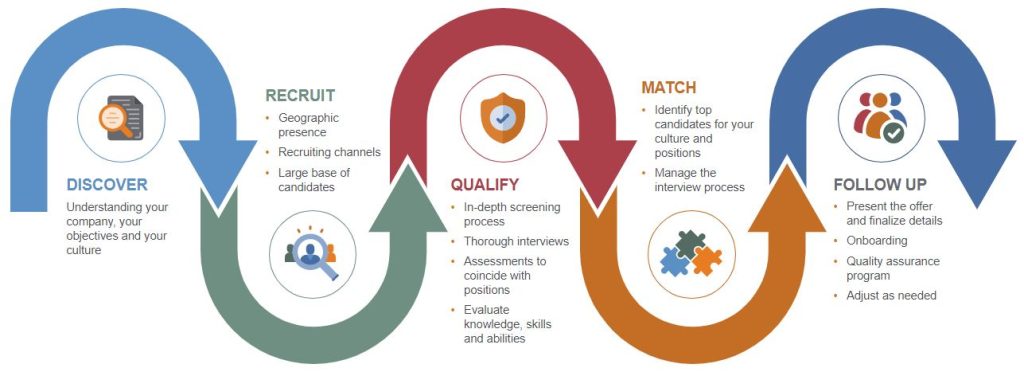
A professional executive search interview process in Vietnam is designed as a structured decision framework rather than a linear hiring workflow. Its purpose is to reduce leadership risk, ensure alignment, and support defensible decisions in complex enterprise and FDI environments.
2.1 The 7-stage executive search framework
A structured executive search process typically includes the following seven stages:
- Business Development (BD): Define the real leadership problem, business context, and risk profile
- Sourcing & Market Mapping: Analyze the executive talent landscape beyond active candidates
- Preliminary Interview: Assess leadership judgment, risk handling, and decision-making behavior
- Shortlist Submission: Present a small number of strategic candidate options
- Client Interview: Align expectations on authority, culture, and governance
- Offer & Closing: Manage high-risk decision points and expectation gaps
- Guarantee & Follow-up: Protect outcomes during the post-placement period
Each stage serves a distinct purpose and filters different types of risk before moving forward.
2.2 Why a structured executive search process reduces risk
A structured executive search interview process prioritizes alignment over speed. It prevents rushed decisions driven by urgency and replaces intuition-based judgment with disciplined evaluation.
By sequencing interviews, assessments, and decision checkpoints, organizations improve decision quality and sustainability. This approach is especially critical in Vietnam, where executive hiring often involves confidential transitions, stakeholder complexity, and long-term leadership impact.
3. Stage 1 – Business Development (BD): Defining the Right Leadership Problem
3.1 Why executive search should not start with a job description
In executive search, job descriptions often reflect expectations, not reality. Many leadership failures stem from misalignment between what the role is written to do and what the business actually needs at that moment.
TalentsAll starts by diagnosing the leadership problem behind the role, not by validating a JD.
3.2 Key strategic questions at the BD stage
At this stage, TalentsAll focuses on a small set of critical questions:
- What business risk must this role solve?
- What are the failure scenarios if the wrong leader is hired?
- Does the organization need an operator, a builder, or a stabilizer?
These answers define how candidates should be evaluated later in the interview process.

4. Stage 2 – Sourcing & Market Mapping in Executive Search
4.1 Why executive sourcing in Vietnam is complex
Most senior leaders in Vietnam are passive, confidentiality-sensitive, and not visible on job platforms. Databases and job boards provide limited insight into real leadership capability.
As a result, sourcing without market intelligence often leads to shallow or misleading candidate pools.
4.2 Market mapping beyond CV supply
TalentsAll conducts market mapping based on:
- Industry ecosystems
- Competitors and adjacent sectors
- Succession-ready leadership profiles
This approach identifies leaders who are capable, not just available.
4.3 Discreet executive sourcing approach
Executive outreach is selective and trust-based:
- Targeted, personalized engagement
- No mass messaging
- Public job advertising is selectively limited for sensitive roles, with controlled information to maintain confidentiality.
Discretion protects both client and candidate credibility.
5. Stage 3 – Preliminary Interview of Executive Search
5.1 Preliminary interview vs. HR screening
This stage is not a qualification check. It is a strategic filter to eliminate leadership risk early, before client exposure.
5.2 What is assessed during executive preliminary interviews
TalentsAll evaluates:
- Decision-making logic
- Risk and crisis handling
- Leadership behavior under pressure
- Governance and cultural adaptability
Past titles matter less than how decisions were made.
5.3 Understanding motivation, timing, and leadership maturity
The interview also tests:
- Career intent and readiness
- Timing of transition
- Learning patterns from past failures
This reduces late-stage dropouts and misalignment.
6. Stage 4 – Shortlist Submission
6.1 Why fewer executive candidates lead to better decisions
TalentsAll typically presents 2–4 executive candidates. This reduces cognitive overload and enables clearer comparison based on leadership trade-offs, rather than popularity or surface-level credentials.
6.2 Helping clients interview smarter
Beyond candidate submission, TalentsAll helps clients structure interviews more effectively by clarifying:
- Key interview focus areas
- Critical validation priorities
- Where deeper probing is required
This ensures interviews remain consistent, focused, and aligned with the original leadership problem.

7. Stage 5 – Client Interview Process in Executive Search
TalentsAll supports both sides through:
- Clear candidate preparation
- Structured debriefs after each round
- Recalibration when misalignment appears
8. Stage 6 – Offer Management & Closing in Executive Search
8.1 Why executive offers are not only about compensation
At the executive level, compensation is rarely the deciding factor. Senior leaders focus more on decision authority, organizational stability, and trust signals from top leadership.
An offer succeeds only when candidates clearly understand their real scope of influence and feel confident about the organization’s long-term direction.
8.2 Common risks during the offer stage
The offer stage carries the highest risk in executive search. Common issues include counter-offers, last-minute withdrawals, and misalignment discovered after acceptance.
These risks are not transactional problems. They reflect deeper concerns around expectations, authority, and organizational clarity.
8.3 Managing expectations and closing sustainably
TalentsAll focuses on aligning expectations early, reducing uncertainty, and handling sensitive discussions with confidentiality.
The objective is not simply to secure acceptance, but to ensure long-term commitment and stability after the executive joins.
9. Stage 7 – Guarantee & Post-Placement Follow-Up
9.1 Why post-placement follow-up matters in executive search
Executive search risk often emerges after the offer is accepted. The early post-placement period is critical, especially in complex stakeholder and governance environments.
9.2 Guarantee approach and early risk detection
TalentsAll provides a defined post-placement guarantee period, focused on early alignment and stability. During this phase, TalentsAll monitors key feedback, early warning signals, and adjustment needs to protect the hiring decision beyond signing.
10. Common Mistakes in Executive Search Process in Vietnam
10.1 Applying mid-level hiring logic to executive search
A common mistake is assessing executives using mid-level hiring criteria. As hiring shifts toward skill-based and decision-based evaluation, executive interviews must focus on leadership judgment, not task execution or tenure.
10.2 Over-reliance on CVs and job titles
Titles and career histories no longer reflect real leadership capability. In a skill-based hiring environment, how decisions are made matters more than where candidates have worked.
10.3 Rushing executive decisions under business pressure
Market volatility and transformation pressure often push organizations to move fast. In executive search, speed without structure increases misalignment risk and weakens decision quality.
10.4 Ignoring cultural and governance fit
As FDI governance standards rise, cultural and decision-making fit becomes critical. Leaders who perform well technically may still fail if governance expectations are unclear or misaligned.
Why TalentsAll Leads Executive Search for Enterprise & FDI in Vietnam
With a deep understanding of Vietnam’s FDI and enterprise environments, TalentsAll focuses on leadership judgment, governance alignment, and long-term decision quality rather than speed or volume.
Founder-led execution ensures confidentiality, accountability, and consistency across every mandate. Instead of acting as a vendor, TalentsAll operates as an advisory partner, helping organizations clarify leadership problems, evaluate trade-offs, and make defensible executive decisions.

Let’s discuss how we can transform your hiring strategy:
TalentsAll – Connecting global talent with visionary companies to drive mutual success.
Email: trang@talentsall.com.vn
Zalo / WhatsApp / SMS: 0944211808
Website: https://talentsall.com.vn/